
When building or buying a high-end gaming PC, every component choice is scrutinized, right down to the operating system. The question of whether Windows 11 Pro offers better performance, higher frames per second (FPS), or lower latency than the standard Windows 11 Home edition is one of the most persistent and often misunderstood debates in the PC community.
Many gamers assume the “Pro” label must signify superiority, perhaps offering exclusive optimization tools or dedicated performance tweaks. After all, if you’re serious about gaming, shouldn’t you buy the most professional version of the OS?
The short answer, which will save you both time and money, is a firm No.
For 99% of PC gamers, Windows 11 Home and Windows 11 Pro offer identical gaming performance.
Table of Contents
This blog post will serve as the definitive guide, dissecting the shared core architecture of both editions, explaining the real purpose of the “Pro” features, and helping you make an informed decision that is right for your gaming rig and your wallet. We’ll dive deep into the technical specifications and address the common myths surrounding background processes and resource overhead.
Why Gaming Performance is Identical (FPS Parity)
The primary reason Windows 11 Home and Pro deliver the same gaming experience is simple: they share the exact same foundation. Both editions run on the same core operating system kernel, utilize the same file structure, and employ the same crucial scheduling and resource management algorithms.
When you launch a modern game, the operating system’s primary job is to manage the CPU, feed the GPU, and keep input/output (I/O) running smoothly. Both Home and Pro use the same cutting-edge components to achieve this:
DirectX 12 Ultimate and WDDM 3.0
The fundamental technologies that power modern PC gaming are integrated at the core OS level, not sectioned off by edition:
- DirectX 12 Ultimate: This API is the cornerstone of modern graphics technology, enabling features like Ray Tracing, Variable Rate Shading (VRS), and Mesh Shading. This entire suite of tools is available and functions identically on both Windows 11 Home and Pro.
- WDDM 3.0 (Windows Display Driver Model): This driver model is essential for communicating between the OS and your graphics card (GPU). Both editions use WDDM 3.0, ensuring that the driver overhead and graphical pipeline efficiency are identical.
The Game Mode Feature: No Pro Exclusive
Windows 11 includes a feature called Game Mode, which is designed to optimize gaming performance by temporarily suspending unnecessary background services and ensuring that the game receives prioritized access to CPU and GPU resources.
Crucially, Game Mode is available and functions identically on both Windows 11 Home and Pro. There is no “Pro Game Mode” that offers enhanced optimization or finer control. When activated, both editions redirect system focus to the foreground game, resulting in the same resource allocation profile.
The Benchmark Evidence
If you search for side-by-side benchmark tests comparing Windows 11 Home and Pro in popular titles like Cyberpunk 2077, Elden Ring, or Call of Duty: Warzone, the results consistently show negligible differences. Any measured variance is typically within the margin of error (1-2 FPS), making it impossible to feel or see during actual gameplay. The bottlenecks in gaming are overwhelmingly determined by your GPU, CPU, and RAM speed, not by the specific edition of Windows 11 you run.
Shared Gaming Innovations: DirectStorage and Auto HDR
Windows 11 introduced several groundbreaking features specifically tailored for gamers. These features fundamentally change how games load and look, and the important point for our comparison is that both Home and Pro include them.
DirectStorage: Lightning-Fast Load Times
What it is: DirectStorage is a revolutionary API that allows game assets to load directly from a fast NVMe Solid State Drive (SSD) straight to the GPU’s VRAM, bypassing the CPU bottleneck entirely. This dramatically reduces game loading times.
Home vs. Pro: This feature is hardware-dependent (it requires an NVMe SSD and a DirectX 12 GPU) but OS edition-independent. Whether you are running Home or Pro, as long as your hardware meets the specification, you benefit from the faster I/O speeds.
Auto HDR: Making SDR Games Shine
What it is: Auto HDR (High Dynamic Range) automatically adds HDR visual enhancements to thousands of games built on DirectX 11 or later that were originally designed for SDR (Standard Dynamic Range). This boosts color, contrast, and brightness, making older titles look more vibrant on modern HDR-compatible displays.
Home vs. Pro: Like DirectStorage, Auto HDR is a core feature of the Windows 11 display stack. It requires an HDR-capable monitor but does not require the Pro edition. Any Windows 11 user with the right screen can enable this feature via the Display settings.
Optimizations for Windowed Games (Reduced Latency)
A lesser-known but critical enhancement in Windows 11 is the optimization for games running in borderless windowed or windowed modes. This optimization reduces latency and increases frame rates in thousands of DirectX 11 and later games. This feature is crucial for streamers and multitaskers, and yes, it is included in both Windows 11 Home and Pro.
The True Difference: Business, Security, and Advanced Features
If performance is the same, why does Windows 11 Pro cost more? The answer lies in its target audience: IT professionals, small businesses, and true power users who need advanced system management and corporate-level security.
These are the features you pay for when you choose Pro, and none of them directly enhance gaming FPS:
1. Advanced Security and Data Protection
Windows 11 Home offers robust baseline security (Windows Defender, Firewall, Windows Hello), but Pro adds essential enterprise-grade protections:
- BitLocker Drive Encryption: This is perhaps the most significant Pro-only feature for security-conscious users. BitLocker allows you to encrypt your entire hard drive, securing your data in case your device is lost or stolen. While extremely useful for data protection, running BitLocker can introduce a negligible amount of overhead, as the CPU needs to constantly decrypt and encrypt data. For gaming purposes, this overhead is usually minimal and far outweighed by the security benefit for corporate data.
- Windows Information Protection (WIP): Helps protect corporate apps and data against accidental data leaks.
2. Enhanced Connectivity and Management
The core of the Pro edition’s value proposition is centralized control and remote access:
- Remote Desktop Host: Windows 11 Home can act as a client (it can connect to another PC), but Pro can act as the host (allowing another PC to connect into it). This is critical if you need to remotely access your gaming PC from a laptop or work computer.
- Domain Join and Group Policy: Essential for business environments, Domain Join allows a PC to connect to a corporate network (a Windows Server domain). Group Policy allows network administrators to manage system settings, security, and software updates across many computers simultaneously. These features are irrelevant for the typical home gamer.
3.Virtualization and Sandbox Tools
For developers, testers, or users who need to run multiple operating systems simultaneously, Pro provides superior virtualization tools:
- Client Hyper-V: This native Microsoft hypervisor allows you to create and run virtual machines (VMs). This is only available in Pro.
- Windows Sandbox: A disposable, isolated desktop environment. When you close it, all files and changes are deleted. This is excellent for testing untrusted software safely and is exclusive to Pro.
If you are a game developer who needs to run a Linux build environment or a testing VM, Hyper-V could justify the Pro cost. For everyone else, it’s unnecessary.
The Hardware Ceiling: RAM and CPU Limits (Irrelevant for Gamers)
One of the often-cited differences between the editions concerns the maximum supported hardware. While technically true, the limits of Windows 11 Home are so high that they are completely irrelevant to virtually all consumer gaming PCs.
| Feature | Windows 11 Home Limit | Windows 11 Pro Limit | Relevance for Gaming |
|---|---|---|---|
| Maximum RAM (Working Memory) | 128 GB | 2 TB (2048 GB) | Irrelevant. Even the most extreme modern gaming builds rarely use more than 64 GB of RAM. 128 GB is sufficient for even the most demanding content creation and flight simulators. |
| CPU Sockets | 1 Physical CPU | 2 Physical CPUs | Irrelevant. Consumer motherboards (Intel Z-series, AMD X-series) only support one physical CPU socket. Dual-socket support is limited to expensive server or workstation motherboards. |
| Maximum CPU Cores | 64 Cores | 128 Cores | Irrelevant. The highest-end consumer CPUs currently available (e.g., Intel i9 or AMD Ryzen 9) typically have a core count well under 64. |
The Verdict on Hardware Limits: Unless you are building a custom, dual-socket, terabyte-RAM workstation and somehow plan to game on it (which is highly inefficient and expensive), the increased hardware limits of Windows 11 Pro offer zero practical benefit.
The Resource Overhead Myth: Does Pro Slow Down Your Games?
A common theory among gamers is that since Windows 11 Pro includes more features (BitLocker, Hyper-V, Group Policy services), it must run more background processes, thereby consuming more RAM and CPU cycles and leading to lower FPS.
While it is true that a fully activated Windows 11 Pro system can have slightly more processes running than a stock Home installation, this difference is generally negligible on modern gaming hardware.
Pro Features Are Not Always Active
Most of the “extra” features in Pro such as Hyper-V, Windows Sandbox, and Remote Desktop Hosting are dormant services until you specifically enable and use them. They don’t consume meaningful resources during standard operation, especially not while you are actively running a demanding game under Game Mode prioritization.
If you were to activate and actively use a resource-heavy Pro feature, such as running a Virtual Machine via Hyper-V in the background while gaming, then you would absolutely see a performance dip. However, this is a user choice, not a built-in deficit of the Pro OS itself.
The Home Edition Isn’t “Lighter”
It is important to remember that Windows 11 Home is already highly optimized. Stripping away the business features does not make it inherently better at running games. The core components responsible for gaming optimization the scheduler, DirectX, and Game Mode are identical. The resource usage is fundamentally tied to the same OS kernel.
Conclusion on Overhead: Any measurable difference in resource consumption between a fresh install of Home and Pro is so small (often less than 1% CPU utilization) that it will not translate into a noticeable difference in in-game frame rates. Focus on managing your third-party background applications (RGB software, overlays, chat apps) for real performance gains, not worrying about the OS edition.
Who Should Buy Which Edition?
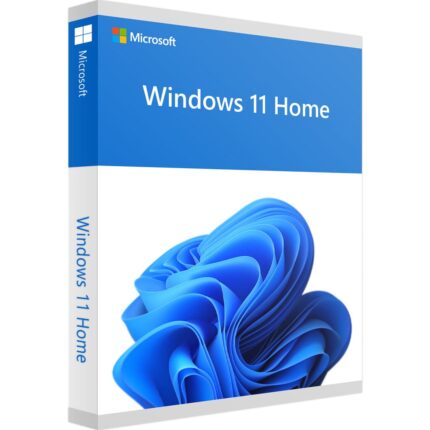
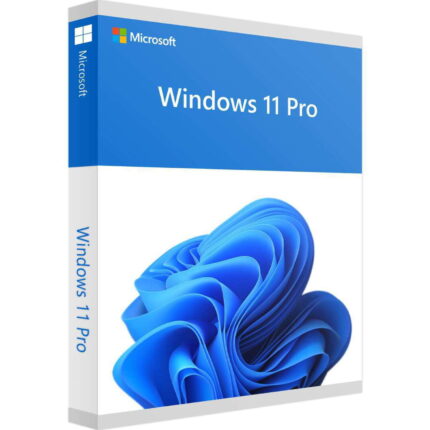
The debate over Windows 11 Home vs. Pro for gaming boils down to whether you need the advanced business, security, and networking tools Pro offers, not whether it improves your game performance.
Recommendation 1: Windows 11 Home (The Gamer’s Choice)
Best for: The vast majority of gamers, streamers, and home users.
If your PC is primarily used for gaming, content consumption, streaming, or general productivity, Windows 11 Home provides every single feature necessary for the best possible gaming experience. You get Auto HDR, DirectStorage, DirectX 12 Ultimate, and Game Mode, all at a lower price point. Save the extra money and put it towards a better graphics card or a larger NVMe SSD.
Recommendation 2: Windows 11 Pro (The Power User’s Choice)
Best for: Business owners, developers, IT professionals, and highly security-conscious users.
You should consider Windows 11 Pro if you absolutely need one or more of these core Pro-exclusive functions:
- BitLocker Encryption: To secure highly sensitive personal or professional data.
- Hyper-V/Windows Sandbox: To run virtual machines or safely test software.
- Remote Desktop Hosting: To remotely connect into your gaming rig from anywhere.
- Domain Join/Group Policy: If the PC must be part of a corporate network.
For performance alone, upgrading to Pro is simply a waste of money. Choose the edition that fits your functional needs outside of gaming.
Frequently Asked Questions (FAQ)
Q1: Does Windows 11 Pro increase FPS in games compared to Home?
A: No. Extensive benchmarks consistently show that Windows 11 Home and Pro offer virtually identical frame rates (FPS) in games. They share the same core architecture, gaming APIs (DirectX 12 Ultimate), and Game Mode features.
Q2: Which edition supports DirectStorage and Auto HDR?
A: Both editions support both DirectStorage (for faster loading) and Auto HDR (for enhanced visuals), provided your hardware (NVMe SSD and HDR monitor, respectively) meets the technical requirements.
Q3: Does Windows 11 Pro have more bloatware or background tasks that slow down gaming?
A: While Windows 11 Pro includes additional security and management features, most of these services are dormant unless actively enabled (like Hyper-V or BitLocker). On a modern gaming system, any resource overhead from the Pro edition is negligible and will not impact your in-game performance.
Q4: Should I upgrade from Home to Pro just for gaming?
A: No. If your only motivation for upgrading is to achieve better gaming performance, the upgrade cost is not justified. Windows 11 Home provides all the necessary gaming optimizations.
Q5: Is the 2 TB RAM limit in Pro relevant for modern gaming?
A: No, the 2 TB RAM limit is irrelevant for consumer gaming. High-end gaming PCs typically use 32 GB or 64 GB of RAM, which is far below the 128 GB limit of Windows 11 Home. The 2 TB support in Pro is designed for high-end servers and professional workstations.
This guide is designed to clarify the technical differences between Windows 11 Home and Pro, ensuring you invest wisely in your next gaming build. Whether you choose Home or Pro, you’ll be running the exact same optimized gaming platform.