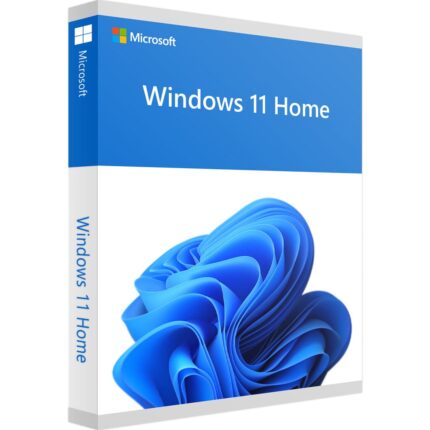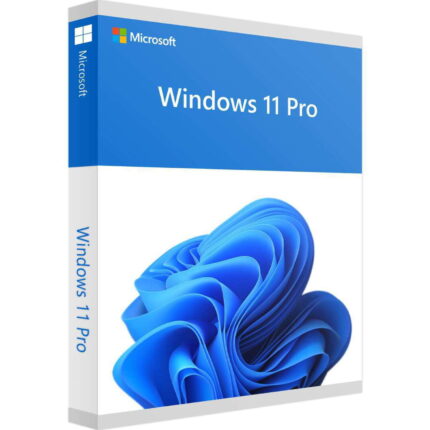
When you are about to install Windows 11, you face an immediate choice: Home or Pro?
For most home users, the two editions look virtually identical. They both have the same new Start Menu, the same performance for gaming, and the same sleek look.
But then you see the price difference. The official Microsoft Store price for Windows 11 Pro is significantly higher than the Home edition.
So, what exactly are you paying for? Is Windows 11 Pro just “Home, but better,” or does it contain specialized tools that the average user will simply never touch?
This comprehensive guide will end the confusion. We will dive into the technical features specifically BitLocker and Hyper-V to help you determine if the extra cost is a necessary investment or an unnecessary expense.
Table of Contents
The Core Question: Is Pro Faster for Gaming? (Spoiler Alert)
Let’s get the biggest myth out of the way immediately.
No. Windows 11 Pro is not faster than Windows 11 Home for gaming or general daily use.
Both editions share the exact same core operating system architecture, scheduling methods, and gaming APIs (like DirectX 12 and DirectStorage). The features unique to Pro (BitLocker, Hyper-V, etc.) are only administrative tools that run in the background if you enable them.
If you are a gamer or a standard home user who just browses the web, streams video, and uses Microsoft Office, installing Home will give you 100% of the speed and stability you need. The choice between Home and Pro is purely about functionality, not performance.
1. Security and Data Protection (BitLocker)
This is perhaps the most important difference for professional users and anyone who carries sensitive data.
What is BitLocker?
BitLocker is a full disk encryption feature available only in Windows 11 Pro.
It protects your data by encrypting your entire drive, which means if your laptop is lost or stolen, your files cannot be accessed without authentication.
While Windows 11 Home offers basic device encryption, it is limited compared to BitLocker. Pro gives you full control over encryption settings, recovery keys, and external drive protection.
| Feature | Windows 11 Home | Windows 11 Pro |
|---|---|---|
| BitLocker | No (Uses Device Encryption) | Yes (Full Control) |
| Encryption Type | Basic/Automatic | Powerful/Customizable |
BitLocker in Pro: Full Control
In Windows 11 Pro, you get the full BitLocker utility. This gives you manual control over:
- Encryption Strength: Choose between AES 128-bit and 256-bit.
- Key Management: Store the recovery key in a text file, print it, or save it to your Microsoft account.
- Specific Drives: Encrypting only a specific partition or an external drive.
Encryption in Home: Device Encryption
Windows 11 Home has a simplified version called Device Encryption. This is typically enabled automatically if your PC meets specific hardware requirements (like having a TPM chip).
The downside is that it is integrated into the OS and provides less manual control. If you lose your recovery key, it’s harder to manage without going through your Microsoft account.
Verdict: If data security is your highest priority (e.g., lawyers, financial professionals, journalists), Windows 11 Pro and BitLocker are non-negotiable.
2. Virtualization and Testing (Hyper-V & Sandbox)
Virtualization is the ability to run another operating system (like Linux, or an older version of Windows) within a window on your current machine.
What is Hyper-V?
Hyper-V is a built-in virtualization tool available in Windows 11 Pro.
It allows you to run multiple operating systems (like Linux or another Windows version) on the same PC using virtual machines.
This feature is useful for developers, testers, and IT professionals who need isolated environments for testing or running different systems.
| Feature | Windows 11 Home | Windows 11 Pro |
|---|---|---|
| Hyper-V | No | Yes |
| Windows Sandbox | No | Yes |
Why Hyper-V Matters (The Developer/Tester Tool)
- Developers/IT Pros: If you need to test software on various operating systems, or run server tools without dedicating a separate machine, Hyper-V is essential.
- Linux Users: If you want to run a Linux distro (like Ubuntu) seamlessly alongside your main Windows session, Hyper-V provides excellent integration.
Windows Sandbox: The Security Playground
Windows 11 Pro also includes the Windows Sandbox. This is a lightweight, temporary virtual environment.
Imagine you download a sketchy file or want to visit a suspicious website. You can open it in the Sandbox. When you close the Sandbox, everything you did including any viruses or malware is instantly wiped out. It’s a perfect security tool that Home users don’t get.
Verdict: If you are a developer, an IT student, or frequently test unfamiliar software, Windows 11 Pro is required for its native Hyper-V and Sandbox tools.
3: Networking and Remote Access (Remote Desktop)
Both Home and Pro allow you to initiate a remote desktop session (i.e., you can use your Windows 11 PC to control another PC).
The difference lies in the ability to be the HOST.
| Feature | Windows 11 Home | Windows 11 Pro |
|---|---|---|
| Remote Desktop | Client Only | Host and Client |
Why Being a Host Matters
- IT Support: You can securely connect to your PC from anywhere in the world (e.g., controlling your office desktop from your home laptop).
- Screen Sharing/Troubleshooting: It allows IT staff to connect directly to your desktop for deep troubleshooting without needing third-party tools like TeamViewer or AnyDesk.
Windows 11 Home can only be the client. If you need to access your PC remotely using the native Windows Remote Desktop protocol, you must have Pro.
4: Enterprise-Level Management (Domain Join)
This is the feature that matters most to small businesses and corporate users.
Domain Join: The ability to connect your PC to a company’s centralized network domain. This allows the IT department to manage security policies, user permissions, and software deployment for thousands of computers from a single server.
- Windows 11 Home: Cannot join a domain. It is restricted to peer-to-peer networking (Workgroups).
- Windows 11 Pro: Can join a domain.
If you are buying a PC for use in a company environment, Home is useless. Pro is the minimum requirement for integration into a corporate network.
5. The Hardware Limits: RAM and CPU Support
While these limits rarely affect the average user, they are a technical differentiator.
Processor (CPU) Group Limits
- Windows 11 Home: Supports CPUs with up to 64 processor cores.
- Windows 11 Pro: Supports CPUs with up to 128 processor cores.
Unless you are running a high-end workstation or server, this difference is completely negligible for gaming or daily productivity.
Memory (RAM) Limits
- Windows 11 Home: Supports a maximum of 128 GB of RAM.
- Windows 11 Pro: Supports a massive maximum of 2 TB (2048 GB) of RAM.
Again, 128 GB is far more than most users will ever install. However, if you are running heavy virtualization, massive databases, or advanced scientific simulations, the 2TB limit in Pro gives you room to grow.
6. Windows 11 Home vs. Pro: Feature Comparison Table
This table summarizes the core technical differences you pay for in the Pro edition.
| Feature | Windows 11 Home | Windows 11 Pro |
|---|---|---|
| Price (Official) | Cheaper | More Expensive |
| BitLocker Encryption | Simplified Device Encryption Only | Full BitLocker Control |
| Hyper-V (Virtualization) | No | Yes |
| Windows Sandbox | No | Yes |
| Remote Desktop | Client Only (Can connect out) | Host & Client (Can connect in) |
| Domain Join | No (Limited to Workgroups) | Yes (Corporate Network) |
| Assigned Access/Kiosk Mode | No | Yes |
| Max RAM Supported | 128 GB | 2 TB |
7. Best Key Deals: Should You Buy Retail or OEM?
Once you decide which version you need (Home or Pro), the next step is finding the best deal. This leads us back to the Retail vs. OEM debate.
- Official Retail Key (Microsoft Store):
- Pros: 100% legal, full Microsoft support, license is transferable to a new PC forever.
- Cons: Very expensive.
- OEM Key (Third-Party Sellers):
- Pros: Extremely cheap (often 90% off the retail price).
- Cons: License is permanently tied to the first motherboard it activates on. If you replace the motherboard, you need a new key. Support is often non-existent.
The Best Deal Strategy
For most users (Gamers, Students, Home Users) who plan to use their PC for many years without changing the motherboard, the OEM Key for Windows 11 Home is the most cost-effective solution. The money saved can be spent on better hardware.
If you are a professional, and the key cost is covered by your company, or if you regularly upgrade your PC, invest in the full Retail Pro Key for maximum flexibility and legal compliance.
8. The Verdict: Who Should Buy Home, and Who Needs Pro?
Your decision should be based purely on the advanced features BitLocker, Hyper-V, and Domain Join.
Choose Windows 11 Home If You Are A:
- Gamer: All the gaming performance you need.
- Standard Home User: Browsing, streaming, casual productivity.
- Student: Unless your university coursework specifically requires virtualization (Hyper-V).
Bottom Line for Home: If you don’t know what BitLocker or Hyper-V are, you probably don’t need them.
Choose Windows 11 Pro If You Are A:
- Small Business Owner or Corporate User: Domain Join and Group Policy are mandatory for centralized management.
- Software Developer or IT Professional: Hyper-V and Sandbox are essential for testing and isolated development environments.
- Security Conscious User: You carry sensitive personal or financial information and require the customizable, full-disk encryption of BitLocker.
- Remote Worker: You need the ability to host a native Remote Desktop connection to access your work PC from a remote location.
Frequently Asked Questions (FAQ)
Q: Can I upgrade from Windows 11 Home to Pro later?
A: Yes! You can easily upgrade from Home to Pro by purchasing a Pro key. Simply go to Settings > System > Activation and click “Change product key.” You don’t need to reinstall Windows. The upgrade usually takes less than five minutes.
Q: Does Windows 11 Pro use more resources (RAM/CPU) than Home?
A: No. When the Pro-exclusive features (like Hyper-V or BitLocker) are turned off, the resource usage is virtually identical to the Home edition. The difference is negligible.
Q: If I buy a Pro key, can I use it to install Home?
A: No. Keys are edition-specific. A Windows 11 Pro key can only activate Windows 11 Pro.
Q: Does BitLocker slow down my SSD?
A: Modern SSDs and CPUs are fast enough that the performance impact of BitLocker encryption is almost unnoticeable during daily use. The security benefits far outweigh the minor performance hit.
Q: Are there any differences in the Windows 11 interface between Home and Pro?
A: No, the user interface, Start Menu, Taskbar, and visual features are exactly the same in both editions. The differences are hidden in the administrative tools and advanced settings panels.
Did this guide clarify your choice? Let us know in the comments which edition you decided to go with and why!