If you are building a new PC or upgrading an old laptop to Microsoft’s latest operating system, you have likely hit a confusing roadblock: the price of the license.
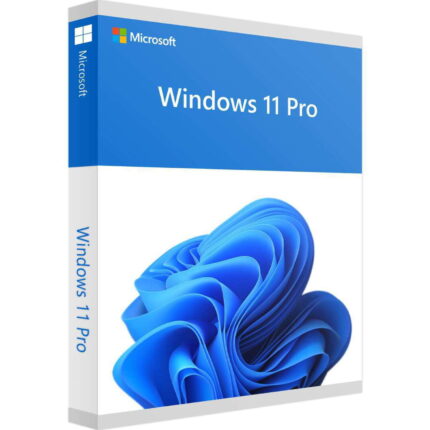
You visit the official Microsoft Store, and Windows 11 Pro costs $199. Then, you browse third-party sites or see tech YouTubers promoting keys, and suddenly, you see Windows 11 Pro OEM keys for as low as $15 or $20.
How can the same product have such a massive price gap? Is the cheaper one illegal? Will it stop working after a month?
This is the ultimate debate of Retail vs. OEM keys.
In this comprehensive guide, we will break down everything you need to know about Windows 11 licensing. By the end of this post, you will know exactly which key type suits your needs, your budget, and your hardware.
Table of Contents
1. Understanding the Basics: What is a Windows License?
Before diving into the specific types, it is crucial to understand that when you “buy Windows,” you aren’t buying the software itself. You are buying a license to use it.
The software (the ISO file) is free to download directly from Microsoft’s website. You can install it on any machine. However, to unlock all features (like personalization settings) and remove the “Activate Windows” watermark, you need a 25-character Product Key.
Microsoft categorizes these keys based on who is buying them and how they are intended to be used.
2. What is a Retail Key (FPP)?
A Retail Key, often referred to as FPP (Full Packaged Product), is the standard consumer license. This is what you get when you buy a boxed copy of Windows 11 from a store like Best Buy, Amazon (officially), or a digital download directly from the Microsoft Store.
The “Golden Ticket” of Licenses
Think of a Retail key as a license that belongs to you, the person, not the computer.
Key Features of Retail Keys:
- Transferability: This is the biggest selling point. If you buy a Retail key for your current PC, and three years later you build a completely new computer, you can deactivate the key on the old PC and reactivate it on the new one. It travels with you.
- Hardware Changes: You can change every single part of your PC (Motherboard, CPU, GPU), and the Retail key will still work.
- Official Support: You are entitled to direct support from Microsoft Customer Service if you encounter activation issues.
Best For: PC enthusiasts who upgrade their hardware frequently and want a license that lasts a lifetime.
3. What is an OEM Key?
OEM stands for Original Equipment Manufacturer. These keys are designed primarily for companies that build computers—think Dell, HP, Lenovo, or custom system integrator shops.
When you buy a laptop from a store, it comes with Windows pre-installed. That license is an OEM license.
The “Motherboard Marriage”
Unlike the Retail key, an OEM key is tied strictly to the hardware, specifically the motherboard. Once an OEM key is activated on a PC, it is “married” to that motherboard forever.
Key Features of OEM Keys:
- Non-Transferable: You cannot move this license to a new PC. If your computer dies or you build a new one, the key dies with the machine.
- Motherboard Sensitivity: If you upgrade your graphics card or RAM, the key is fine. However, if you replace your motherboard, Windows will likely consider it a “new computer” and deactivate itself.
- No Microsoft Support: Technically, Microsoft does not provide direct support for OEM software. The support is supposed to come from the device manufacturer (e.g., Dell or HP).
Best For: System builders on a tight budget who plan to keep the same computer for many years without changing the motherboard.
4. Retail vs. OEM: The 5 Critical Differences
Let’s compare them head-to-head to see where the value lies.
| Feature | Windows 11 Pro Retail Key | Windows 11 Pro OEM Key |
|---|---|---|
| Price | Expensive ($199+) | Cheap ($15 – $30 on third-party sites) |
| Transferability | Yes (Can move to new PC) | No (Tied to the first PC) |
| Hardware Upgrades | Unlimited | Limited (Motherboard swap kills it) |
| Tech Support | Direct from Microsoft | Provided by Manufacturer (or none) |
| Availability | Microsoft Store, Major Retailers | Pre-installed, Third-party key sites |
| Upgrade Path | Can upgrade Home to Pro | Usually requires a clean install |
1. Price
Retail is significantly more expensive. You are paying for the flexibility and the rights to move the license. OEM keys are sold in bulk to manufacturers at a heavy discount, which is why they end up so cheap on the grey market.
2. The “New PC” Rule
If you are the type of person who builds a brand new high-end gaming rig every 2 years, a Retail key is an investment. You pay $199 once, and you might use that same license for 10 years across 5 different builds.
If you buy an OEM key, you have to buy a new $15-$20 key every time you build a new PC.
3. The Upgrade Limitation
A Retail key can often be used to upgrade a Windows 11 Home system to Windows 11 Pro directly through the settings menu. OEM keys are often restricted; they typically require a fresh installation of the specific version (Pro) they are associated with.
5. The “Grey Market” Reality: Are Cheap Keys Legal?
This is the elephant in the room. How are websites selling Windows 11 Pro for $5 when Microsoft charges $199?
These sites operate in the Grey Market.
Where do cheap OEM keys come from?
- Surplus Bulk Keys: A company might buy 10,000 licenses for their corporate laptops but only use 9,000. They might sell the remaining 1,000 to a third-party reseller to recoup costs.
- Regional Pricing: Keys bought in countries with lower currencies are resold in the US or Europe.
- Student/Education Keys: Licenses meant for universities finding their way into the public market.
Is it illegal?
For the buyer (you), it is generally not illegal to buy and use these keys. You are purchasing a product code.
However, for the seller, it often violates Microsoft’s Terms of Service. Microsoft states that OEM keys are meant for “System Builders” who are selling a complete PC to a client, not for individuals installing it on their own rig.
The Risk: While rare, Microsoft can deactivate batches of keys if they discover they were sold illegitimately. If you buy a $5 key, there is a small chance it could be revoked in the future. However, for many users, the low cost makes this a risk worth taking (buying a $5 key ten times is still cheaper than one $199 key).
6. Volume Licenses: The Trap You Must Avoid
When looking for cheap keys, you might stumble upon a scam. Some sellers sell MAK (Multiple Activation Keys) or Volume Licenses disguised as Retail or OEM.
Avoid these at all costs.
Volume licenses are meant for large corporations. They require the computer to check in with a company server (KMS) periodically.
- The Symptom: You buy a key, it works for 6 months, and suddenly you get a message: “Your Windows license will expire soon.”
- The Reason: The key was part of a corporate batch that has been flagged or the “check-in” period has expired.
Always ensure you are buying a Perpetual license (Retail or OEM), not a Volume license.
7. How to Check Your Current License Type
Do you already have Windows installed? You can check what kind of license you are currently running in seconds.
- Click on Start and type
cmd. - Right-click Command Prompt and select Run as Administrator.
- Type the following command and hit Enter:
slmgr /dli
A small window will pop up. Look at the Description line:
- If it says RETAIL channel, you have a transferrable Retail key.
- If it says OEM_DM channel, you have a hardware-tied OEM key.
- If it says VOLUME_KMSCLIENT, you have a corporate license (or a pirated activator).
8. Final Verdict: Which Key Should You Buy?
To decide, simply find the persona that matches you below.
Choose the RETAIL Key if:
- You are a PC enthusiast: You change motherboards often or build new PCs every few years.
- You want 100% peace of mind: You want zero risk of deactivation and full support from Microsoft.
- You are a business: To remain fully compliant with software audits, businesses should usually stick to Retail or official Volume Licensing agreements, not cheap grey market keys.
Choose the OEM Key if:
- You are on a budget: You would rather spend that extra $180 on a better Graphics Card or more RAM.
- You are a “Set it and Forget it” user: You are building a PC that you plan to use for 5-7 years without major modifications.
- You are reviving an old PC: If you are fixing up an old laptop to give to a relative, a cheap OEM key is the perfect solution.
My Recommendation: For 90% of home users and gamers, a cheap OEM key is the most logical choice. The money saved is substantial. Even if the key fails (which is rare with reputable sellers) and you have to buy another one, you are still saving over $150 compared to the Retail price.
However, if money is no object and you value legitimacy and longevity above all else, go Retail.
9. Frequently Asked Questions (FAQ)
Q: Can I upgrade from Windows 10 Home to Windows 11 Pro using an OEM key?
A: Usually, no. OEM keys generally require a fresh installation (Clean Install) of the specific Windows version. Retail keys can often perform an “in-place upgrade” to unlock Pro features.
Q: Is buying cheap Windows keys from sites like G2A or Kinguin safe?
A: It is generally safe for your computer (no viruses), but there is a financial risk. The key might not work, or it might be revoked later. Always buy from sellers with high ratings and “Money Back Guarantees.”
Q: Does Windows 11 Pro perform better than Home for gaming?
A: No. In terms of gaming performance (FPS), there is zero difference between Home and Pro. Pro is only necessary if you need BitLocker encryption, Remote Desktop, or Hyper-V for virtualization.
Q: Can I use a Windows 10 key to activate Windows 11?
A: Yes! Microsoft allows Windows 10 keys to activate the corresponding edition of Windows 11. If you have an unused Windows 10 Pro key lying around, it will work for Windows 11 Pro.
Q: What happens if I change my motherboard with an OEM key?
A: Windows will likely deactivate. You might get lucky by using the “Activation Troubleshooter” and linking your license to your Microsoft Account, but officially, an OEM key dies with the motherboard.
Did this guide help you decide? Let us know in the comments if you went with the budget-friendly OEM or the premium Retail option!